The Studio
Photo: Ard Johnson
The simple, but distinctive studio building was built in 1916-17 by the recognized and classically inspired architect, Carl Petersen, who previously had designed Faaborg Museum. Johannes Larsen called the studio “the workshop” out of respect for the solid handicraft’s importance in art.
In all its simplicity, the building seems unostentatious, but actually, it isn’t. It had central heating early on, which also made sure the climate in the large winter garden and the greenhouse behind the workshop was stable, and it had a fireproof storage room for the valuable paintings. A shared dream for the artist couple, the new studio contained, first and foremost, a big, simple and beautifully proportioned room for Johannes Larsen, with indirect light from a large, north-facing window, and at the same time, a smaller studio for Alhed, who preferred the warm southern exposure and the winter garden’s motifs close by.
Alhed had a personal style, used quick sketches or pastels and usually she painted in smaller formats, while the large workshop room gave Johannes new possibilities for painting the large pictures he sometimes worked on. The rooms are seen today with much of the original furnishings and inventory from Møllebakken. Johannes Larsen’s studio functioned as a show room as well, and was used then as a temporary exhibition of current works, and could thereby give visiting customers an overview and the impression of the strong connection between life and art at Møllebakken. Several of the larger works had their regular spots in the room, for example, the stork painting on the ceiling.
Johannes Larsen often worked with woodcuts. He drew his motif on a block of wood and cut it out afterward. After the motif was covered with printer’s ink, he put a piece of Japanese rice paper over it and rubbed carefully on the block with a flat whalebone.
The Winter Garden
The winter garden and greenhouse are a fully integrated part of the studio Workshop building’s architecture and its functions. In the greenhouse, tomatoes, grapes and a cornucopia of vegetables and fruit were planted, that needed warmth to grow. The winter garden was created as an ornamental garden with a profusion of flowers, centered around the goldfish pool with its fountain.
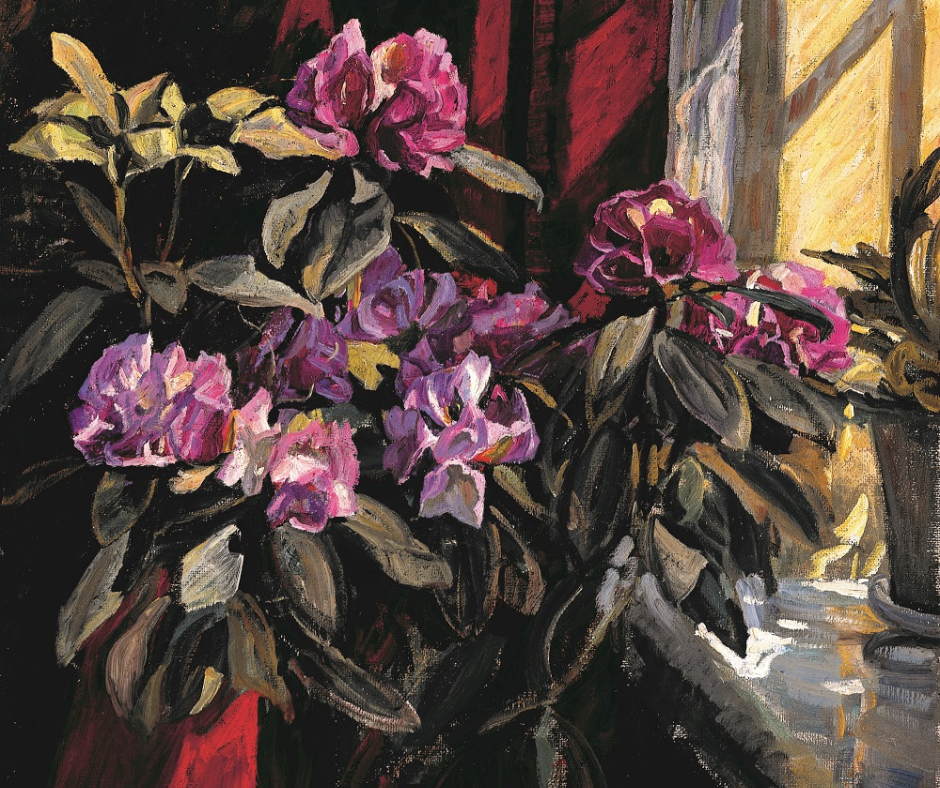
Two symmetrically placed doors led from the winter garden to Johannes’ workshop on the one side, and to Alhed’s on the other; if there was a difference in the size of their studios and their earning capacities, these entrances from the winter garden proclaimed the equality between the two artists. The winter garden was also the place where Alhed found her motifs. Though both garden enthusiasts, plants and flowers remained Alhed’s domain, while Johannes mostly painted animals and landscapes. With the winter garden and the pools and pens for animals outside the workshop, both artists had easy access to their favorite motifs. The winter garden’s back wall is covered with coral stone. These porous stones hold the heat and the humidity, so they help to regulate the indoor climate in the winter garden, while at the same time giving a decorative foothold to Alhed’s orchids.
It was a magical world, especially when the couple held parties in the workshop, and the winter garden, even in winter, could be humid and tropically warm, while icicles hung outdoors, thanks to the then quite modern central heating!