SPECIAL EXHIBITION
FOREST TIME
Johannes Larsen Museet 30. January 2027 – 13. June. 2027
The Forest: A Return Journey
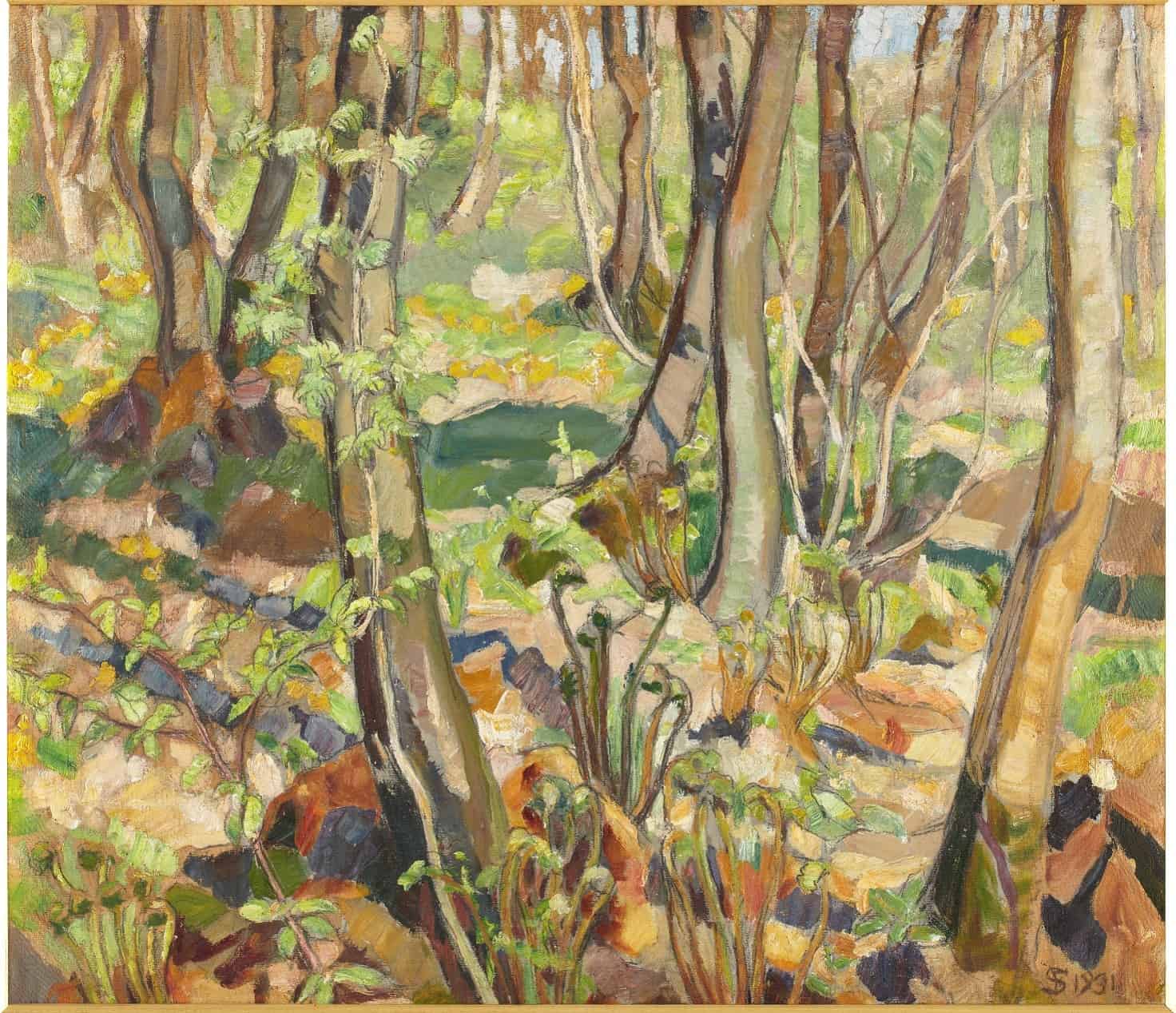
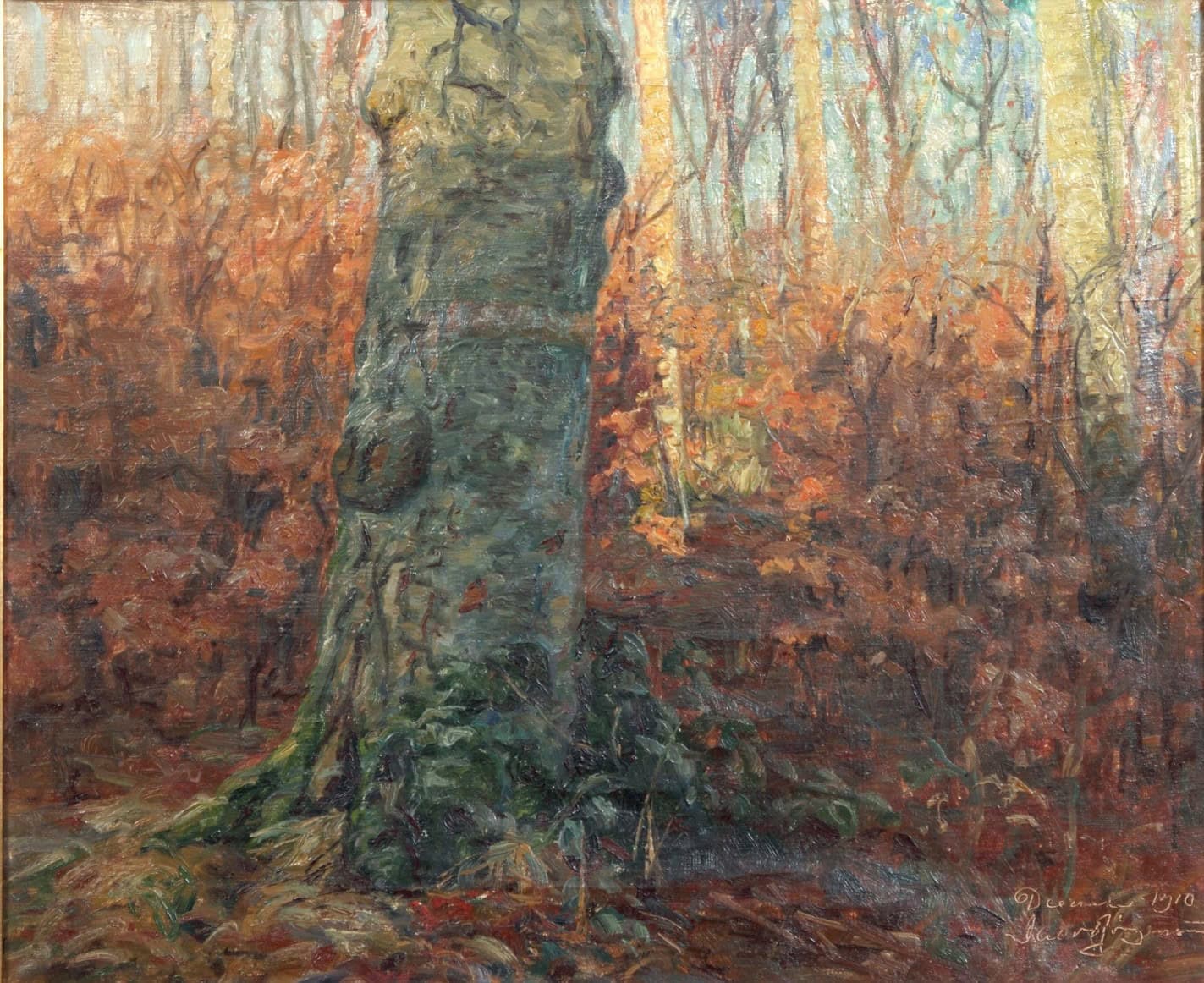
Once upon a time, Denmark was densely covered in forest. Stories were told of all the animals, supernatural creatures and robbers who lived deep within the heart of the forest. Since then, painters and poets have celebrated the Danish beech forest as a national treasure, even though the vast majority of the forests had long since been cleared to make way for agriculture and housing.
In recent years, we have once again entered the age of the forest. As part of the Green Tripartite Agreement, the aim is to increase forest cover in Denmark by 40 per cent by 2045. At the same time, the area of untouched, wild forest is to be doubled. Drawing on the green ambitions of our time, the exhibition explores what it means for Denmark to once again become a forested country. What does it require of us to live more closely with nature? What will the forests of the future look like? And finally: what role does art play, both in our perceptions of the forest and, in very concrete terms, in afforestation projects across the country?
The Johannes Larsen Museum is showing a revised and expanded version of the special exhibition ‘Forest time’, which was presented by the Nivaagaard Collection in early 2026. We see this as a fitting opportunity to continue the conversation about the forest here on Funen, with ample scope to bring together works by the Funen painters and other relevant pieces from the collection, alongside rare loans and contemporary art. The exhibition also incorporates perspectives from the natural sciences, forestry and society, casting our local forests, forest imagery and perceptions of the forest in a new light.
Many of our special exhibitions are, at their core, about humanity’s relationship with nature, about the joy of nature, change and identity. And now it is the forest’s turn – and time. The Johannes Larsen Museum’s collections feature depictions of trees, local motifs from the region, forest interiors and fascinating images with forest themes from various periods. The exhibition offers visitors the chance to immerse themselves in forests of the past, now and never, as local and international art come together here in Kerteminde.
Art as a prism: Perspectives on the forest from the 17th century to the present day
The exhibition brings together historical works from the Nivaagaard Art Collection and the Johannes Larsen Museum, as well as selected loans featuring works by contemporary artists for whom the forest is a central theme in their practice. Some artists work to re-establish humanity’s connection with nature or are directly involved in the creation of new woodland areas.
The exhibition puts our own era’s forest ambitions into perspective by looking back at other historical periods when forest restoration was high on both the political and cultural agendas.
Technically speaking, the forest was literally part of art in days gone by: Dutch paintings depicting forests and trees from the early 1600s date from the final decades when oil paintings were produced on wood, before canvas began to dominate – partly because the Netherlands had depleted its own forests, and the price of imported wood had become too high. Europe’s primeval forests were dwindling, whilst they provided us with everything.
In Denmark, the year 1800 marked a low point in terms of forest cover. Only 3 per cent of Denmark was covered by forest, and in the first half of the 19th century, new scientific knowledge, changing needs and a growing population therefore led to the systematic replanting of the forests. As the 20th century began, nature conservation really came to the fore, supported in part by the Funen Painters, and a new image of Denmark’s landscapes emerged. When the artists travelled to Sweden, they found a different kind of forest, even though it too is often a commercial forest. Here, however, one is more ‘inside the forest’, rather than ‘out in the forest’.
In parts of Denmark, fast-growing plantations became the norm, and the old forests were now a rarity. Although they are cultivated, many of the manor houses’ mixed forests still remind us of the grandeur of the past. In our own time, the 21st century, the forest is to be (re)established on a larger scale once again. This time in response to climate change, the biodiversity crisis and a growing desire for the forest as a recreational and sensory space.
The Forest and Us – An Ever-Evolving Relationship
The forest has always held a special place in our culture, representing the magical, the romantic, the mysterious and the unconscious. It marked the boundary of civilisation – the place where order ceased and where that which did not fit into the rational world view could exist. In folk tales, the forest – and the robbers, witches, trolls and wood nymphs that dwell within it – is often both alluring and dangerous. In nineteenth-century art, however, the forest was depicted as harmonious and peaceful, imbued with a deep sense of national identity. Poets described its light, foliage and solemn atmosphere. It became a place not only for contemplation and community, but also for the individual’s connection to nature and the eternal.
Over time, art began to seek out the more primal and luxuriantly wild, a longing reflected in both the works of the Funen Painters and parts of modernist visual art: a return to the green space, away from civilisation, even though the forest is often a cultivated one. The modern welfare state brought with it leisure time, and the ‘forest walk’ in particular has become the sanctuary that a very large proportion of the population now visits on a regular basis, from childhood to old age, and we all have our own special ‘forest images’ and ‘forest memories’. It seems that we need the forest, but does it need us, and is there scope for a meaningful and sustainable coexistence?
Today, the forest remains both a political battleground and the subject of romantic notions and longings. As the debate over the wolves in Jutland shows, the wildness of nature is one thing in theory, but can be far more confrontational in reality. Allowing nature to develop on its own terms requires us, as humans, to relinquish control or to give nature a helping hand. Is it, in fact, we who must adapt to nature as it draws ever closer?